LIBAAX – Immigrant Journeys

Grow Your Roots
LIBAAX - Immigrant Journeys, LIBAAX Book Insights

Grow Your Roots Where You Land and the Meaning of Home

Introduction What does “home” really mean? Is it a place, a memory, or a feeling we carry within us? For many people navigating change, migration, or personal transformation, this question becomes deeply personal. The idea to Grow Your Roots wherever life takes you challenges traditional views of belonging and identity. It shows that home is not always something we return to—it is something we create. As life moves forward, the ability to Grow Your Roots becomes essential in shaping a meaningful and grounded identity. Identity and Belonging in New Spaces How much should they adapt? How much should they hold onto their past? This balance is not always easy. It requires self-awareness and patience. The journey of finding belonging often includes moments of doubt, confusion, and growth. The idea to Grow Your Roots helps simplify this process. It reminds individuals that belonging is not about fitting perfectly into a new space. It is about creating connections that feel genuine and meaningful. Emotional Strength in Starting Over Starting over can feel overwhelming. It often comes with uncertainty, loneliness, and the pressure to adapt quickly. One of the key lessons from Book Libaax is that emotional strength develops through these challenges. Each step forward builds confidence and resilience. Learning to Grow Your Roots in a new place requires trust in oneself. It means accepting discomfort as part of the journey and recognizing that growth takes time. Over time, what once felt unfamiliar begins to feel like home. It shows that stability is something we create, not something we find instantly. Practical Ways to Grow Your Roots Building a sense of home in a new environment does not happen automatically. It requires intention and effort. Create Meaningful Connections Relationships play a major role in feeling grounded. Engaging with people, sharing experiences, and building trust can create a sense of belonging. Stay Connected to Your Past Holding onto traditions, language, or personal values helps maintain a sense of identity. Embrace the Present Being open to new experiences allows individuals to fully engage with their environment. This openness helps create new memories and connections. Be Patient with the Process Growing roots takes time. It is important to allow space for adjustment without rushing the process. The Role of Storytelling in Understanding Stories have always helped people make sense of their experiences. They provide a way to reflect, connect, and understand complex emotions. Book Libaax uses storytelling to explore themes of identity, belonging, and transformation. Through narrative, readers are able to see their own experiences reflected in new ways. Storytelling creates a shared understanding. It reminds people that they are not alone in their journey. Redefining Stability in a Changing World In today’s world, change is constant. People move for opportunities, education, relationships, and personal growth. This constant movement challenges traditional ideas of stability. The concept of Grow Your Roots offers a new way to think about stability. It suggests that stability comes from within, not from external circumstances. Book Libaax reinforces this idea by showing that identity and belonging can remain strong even in changing environments. It highlights the importance of adaptability and self-awareness in maintaining a sense of balance. Conclusion The journey of finding home is deeply personal and constantly evolving. Through the insights shared in Book Libaax, we see that home is not limited to a single place. It is something we build through relationships, experiences, and self-understanding. The idea to Grow Your Roots wherever you are reminds us that belonging is not something we wait for it is something we create. By embracing change, staying connected to our identity, and building meaningful connections, we can find stability even in unfamiliar spaces.

Cedric muhikira
Immigrant Stories, LIBAAX - Immigrant Journeys

Cedric Muhikira on Immigrant Identity and Belonging

Introduction What does it really mean to belong? For many people, this question becomes more complex when life crosses borders. The experience of adapting to a new culture while holding onto one’s roots creates a unique and often challenging journey. This is where the idea of Immigrant Identity and Belonging becomes deeply meaningful. Through reflections often associated with Cedric Muhikira, we begin to see identity not as something fixed, but as something that evolves. His perspective highlights the emotional and cultural layers of migration, showing how people learn to exist between worlds while still building a sense of self. Understanding Immigrant Identity and Belonging is not just important for immigrants. It offers insight into how all people navigate change, connection, and personal growth in an increasingly global world. Understanding Immigrant Identity When someone leaves their home country, they carry more than physical belongings. They bring language, traditions, beliefs, and memories. These elements form the foundation of identity. But once they enter a new environment, that identity begins to shift. Cedric Muhikira often reflects on how identity becomes layered through experience. Instead of losing one identity and gaining another, individuals develop a combination of both. This layered identity can feel empowering, but it can also create confusion. For many, the struggle lies in trying to balance authenticity with adaptation. The pressure to fit into a new culture can sometimes make people question who they really are. This is where awareness becomes important. Recognizing that identity can grow without disappearing helps individuals feel more grounded during change. The Search for Belonging It is about feeling understood and comfortable in one’s environment. For immigrants, this feeling is not always immediate. In the journey of Immigrant Identity and Belonging, people often find themselves navigating spaces where they feel partially connected but not fully rooted. This in-between space can feel isolating, but it can also be a place of growth. Belonging begins internally. When individuals accept their evolving identity, they become more confident in expressing themselves. This confidence helps them build meaningful connections with others, even in unfamiliar environments. Cultural Balance and Adaptation One of the biggest challenges immigrants face is balancing cultural preservation with adaptation. Holding onto traditions provides comfort and continuity, while adapting to a new culture allows for growth and opportunity. Cedric Muhikira highlights that this balance is not about choosing one over the other. Instead, it is about learning how to integrate both. For example, maintaining language, food, and traditions can keep people connected to their roots. At the same time, engaging with the new culture—through language, social norms, and community—helps create a sense of belonging in the present. This balance is at the heart of Immigrant Identity and Belonging. It can expand to include multiple influences without losing its core. Challenges That Shape Identity The journey of immigration is rarely easy. Challenges such as language barriers, cultural misunderstandings, and social isolation can create emotional strain. Cedric Muhikira’s reflections suggest that these challenges play a crucial role in shaping identity. They force individuals to adapt, reflect, and grow in ways they might not have otherwise. Facing difficulties can lead to greater resilience. People learn to navigate unfamiliar systems, communicate across cultures, and build new networks. These experiences strengthen both personal and emotional development. At the same time, challenges can also create moments of doubt. Feeling different or misunderstood may lead individuals to question their place in society. Recognizing that these feelings are part of the journey helps normalize the experience and reduce isolation. Building a Sense of Self in a New World Creating a stable sense of self in a new environment requires intention. It involves understanding one’s values, embracing change, and finding ways to connect with others. Cedric Muhikira often emphasizes the importance of self-awareness in this process. Knowing what matters most helps individuals make choices that align with their identity. Simple actions can support this journey. Engaging in cultural practices, forming relationships, and participating in community activities all contribute to a stronger sense of belonging. Over time, these experiences create familiarity and comfort. The journey of Immigrant Identity and Belonging becomes less about finding a single place to belong and more about creating a sense of belonging within oneself. The Role of Storytelling Storytelling plays a powerful role in shaping identity and belonging. Sharing experiences allows individuals to express their journey and connect with others who may feel the same way. Cedric Muhikira’s work reflects the importance of narrative in understanding identity. Stories provide space for reflection and validation. They help people see that their experiences are not isolated but part of a larger human story. Conclusion The journey of Immigrant Identity and Belonging is complex, emotional, and deeply personal. It involves balancing past and present, navigating challenges, and building connections in unfamiliar spaces. Through the perspective of Cedric Muhikira, we see that identity is not something to be fixed or defined once. It is something that evolves with experience, shaped by both roots and change. Belonging, in this context, becomes more than acceptance by others. It becomes a sense of comfort within oneself and the ability to connect authentically with the world. If there is one takeaway from this journey, it is that identity and belonging are not destinations. They are ongoing processes. By embracing change, honoring roots, and staying open to growth, individuals can create a sense of belonging that is both meaningful and lasting.

Crossing Borders Changes
Immigrant Stories, LIBAAX - Immigrant Journeys

Why Crossing Borders Changes More Than Location

Introduction Crossing borders is more than a physical act. It’s a journey that reshapes perspectives, emotions, and identity. For many, moving from one country to another marks a significant turning point in life. The experience extends beyond geography—it transforms how people see themselves, how they relate to others, and how they navigate the world. When individuals cross borders, they face new languages, customs, and social norms. Each small adjustment contributes to larger shifts in thinking and feeling. This is why Crossing Borders Changes more than just a person’s location—it transforms the very essence of their lived experience. Literature, personal narratives, and real-life accounts show that these journeys are layered with challenge, growth, and reflection. They reveal how humans adapt emotionally, culturally, and socially in ways that are often unexpected but deeply transformative. Crossing Borders as a Life Experience Moving to a new country or even a new city is a form of rebirth. People leave familiar surroundings, routines, and communities behind. Every border crossed introduces uncertainty, opportunity, and new learning. This journey is rarely linear. Individuals may feel excitement, fear, nostalgia, and anticipation all at once. The emotional landscape is complex, and the process of adjustment can take months or even years. Crossing Borders Changes the way people approach daily life. Simple tasks, like shopping for food or navigating public transport, become exercises in adaptation and awareness. Every interaction requires learning, observation, and reflection. Through these experiences, individuals develop resilience and flexibility. They begin to notice nuances in behavior, culture, and language that they may have previously overlooked. Emotional Shifts and Identity One of the most profound impacts of crossing borders is the shift in identity. People often feel they are living in two worlds at once: the world they left behind and the world they are now entering. This dual existence can create tension. Individuals may struggle with feelings of incompleteness, nostalgia, or cultural dissonance. At the same time, they discover new aspects of themselves as they adapt to different norms and expectations. Crossing Borders Changes not just how people are perceived but also how they perceive themselves. Self-reflection deepens. People reassess values, priorities, and beliefs. They learn to negotiate multiple identities simultaneously, balancing heritage with present experience. These emotional shifts are powerful. They often lead to growth, empathy, and a richer understanding of human complexity. Cultural Adaptation and Learning Adapting to a new culture requires both awareness and openness. It is not simply about learning new customs but about internalizing ways of thinking, behaving, and relating to others. Cultural adaptation can challenge long-held assumptions. People encounter perspectives different from their own and must reconcile them with their personal beliefs. This negotiation shapes both behavior and self-perception. Through this process, individuals gain skills such as cross-cultural communication, patience, and empathy. They also develop a broader worldview that influences how they see global issues, relationships, and community dynamics. Stories of migration often illustrate how Crossing Borders Changes cultural understanding and personal growth simultaneously. They show that adaptation is both a practical and an emotional journey. Relationships and Perspective Moving to a new country reshapes relationships. Connections with family, friends, and community back home may evolve, sometimes creating distance. At the same time, new social bonds form in unexpected ways. These new relationships offer perspective. By interacting with people from diverse backgrounds, individuals gain insight into alternative ways of life. They learn humility, flexibility, and the importance of listening. Even when challenges arise, such as language barriers or cultural misunderstandings, these experiences enrich the sense of identity. Individuals often find that relationships in the new environment contribute to personal growth in ways they could not have imagined. The intersection of old and new social networks highlights why Crossing Borders Changes more than location—it transforms emotional, cultural, and social dimensions of life. Stories That Capture This Change Literature, memoirs, and storytelling have a unique ability to convey the nuanced transformations that occur when people cross borders. Writers explore the tension between past and present, loss and opportunity, familiarity and novelty. Characters in such narratives navigate feelings of dislocation while discovering resilience and creativity. These stories highlight the emotional, cultural, and psychological impact of movement in ways that are relatable across generations and geographies. Readers find comfort and recognition in these narratives. They validate the complex emotions that accompany real-life border crossings, from excitement to loneliness, challenge to growth. By examining these stories, it becomes evident that Crossing Borders Changes not only external circumstances but also inner life, empathy, and identity. Conclusion Crossing borders is more than a geographic act—it is a transformative journey that reshapes identity, emotion, and perspective. Every movement introduces new experiences, challenges, and opportunities for growth. Through adaptation, reflection, and cultural engagement, people discover dimensions of themselves previously unexplored. They learn resilience, empathy, and a broadened worldview. Literature and storytelling remind us of the depth of these transformations. They capture the emotional and psychological changes that accompany leaving one world and entering another. Crossing Borders Changes more than location. It reshapes how people think, feel, and relate to the world. This journey, though challenging, becomes a catalyst for personal growth, cultural understanding, and a richer sense of human experience.

Storytelling in Immigrant Communities
Immigrant Stories, LIBAAX - Immigrant Journeys

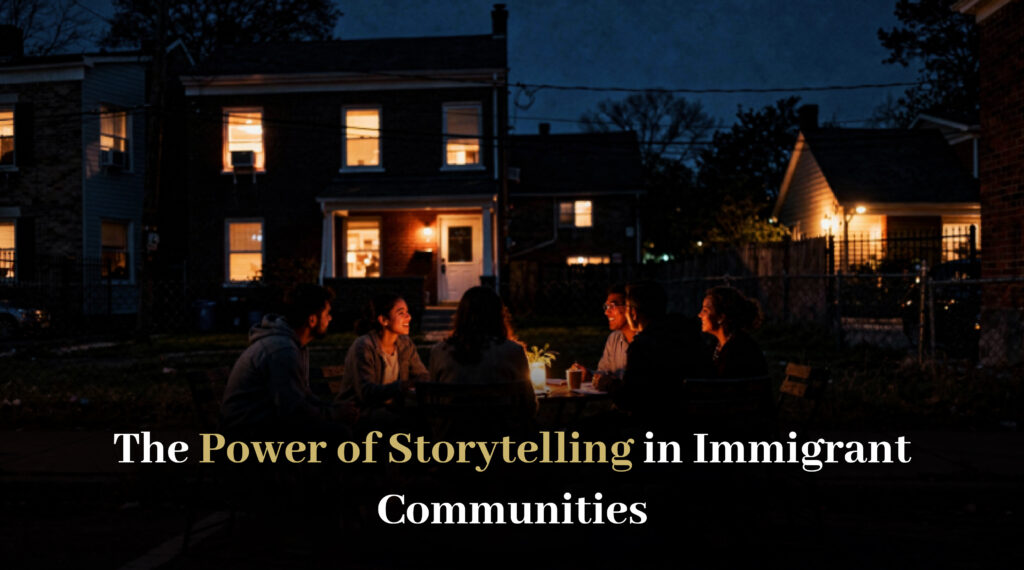
The Power of Storytelling in Immigrant Communities

Introduction Storytelling has always been a central part of human connection, but within immigrant communities, it holds an even deeper meaning. Stories become bridges between the past and the present, between homeland memories and new realities. When people move across borders, they carry more than luggage. They carry experiences, traditions, struggles, and hopes that are often expressed through stories. In immigrant communities, storytelling is not just about entertainment. It is a way to remember, to heal, and to belong. Through shared narratives, individuals make sense of unfamiliar environments while holding onto their cultural identity. These stories offer comfort in moments of uncertainty and strength during times of challenge. This is why the Power of Storytelling in Immigrant communities remains so important today. It helps people navigate change while staying connected to who they are. Stories as Survival For many immigrants, storytelling begins as a survival tool. When language barriers exist and systems feel unfamiliar, stories become a way to communicate emotions that words alone cannot always express. Personal experiences shared within families or communities help individuals process loss, displacement, and adaptation. Stories of hardship and resilience remind people that they are not alone. Hearing how others survived similar journeys provides emotional reassurance and courage. These narratives often include sacrifices made, risks taken, and lessons learned, all of which help newcomers find strength in shared experience. In this way, storytelling becomes a quiet form of resistance against isolation. It keeps memories alive and affirms that experiences matter, even when they are overlooked by the larger society. Preserving Culture Cultural preservation is one of the strongest roles of storytelling in immigrant communities. Traditions, values, and customs are often passed down through spoken stories rather than written records. Elders play a key role in sharing histories that younger generations may never experience firsthand. Through storytelling, cultural identity remains alive despite distance from the homeland. Stories about festivals, family life, and community values help younger generations understand where they come from. These narratives offer context and meaning that textbooks cannot provide. As time passes, stories evolve, but their core purpose remains the same. They protect cultural heritage while allowing it to adapt to new environments. This balance is essential for maintaining identity across generations. Building Community Bonds Storytelling also strengthens bonds within immigrant communities. Shared stories create trust and understanding, helping individuals form meaningful connections. Community gatherings, cultural events, and informal conversations often revolve around storytelling. When people listen to one another’s journeys, empathy grows. Differences in background or experience become opportunities for learning rather than division. Stories encourage mutual respect and a sense of collective identity. The Power of Storytelling in Immigrant communities lies in its ability to transform individuals into communities. It turns separate experiences into shared narratives that foster unity and belonging. Shaping Identity Identity within immigrant communities is often complex. Individuals balance the culture they come from with the culture they now live in. Storytelling helps navigate this complexity by allowing people to explore who they are without losing their roots. Personal narratives help immigrants reflect on their journeys and redefine success on their own terms. Stories allow space for both pride and vulnerability. They acknowledge challenges while celebrating growth. For younger generations, hearing these stories helps shape self understanding. They learn that identity is not fixed but evolving. Storytelling offers reassurance that it is possible to honor one’s heritage while embracing new opportunities. This ongoing exchange of stories reinforces the Power of Storytelling in Immigrant communities as a tool for self discovery and confidence. Passing Stories Forward One of the most meaningful aspects of storytelling is its ability to move across generations. Parents and grandparents pass down experiences that shape how children understand the world. These stories teach values such as resilience, empathy, and perseverance. In modern times, storytelling has expanded beyond spoken word. Books, films, podcasts, and digital platforms now carry immigrant stories to wider audiences. This visibility helps challenge stereotypes and promote understanding. Passing stories forward ensures that experiences are not forgotten. It gives future generations a sense of continuity and pride, reminding them that their history has value and meaning. Conclusion Storytelling is more than a tradition within immigrant communities. It is a source of strength, identity, and connection. Through stories, individuals preserve culture, build community, and navigate the challenges of displacement. As the world becomes increasingly interconnected, these stories matter more than ever. They remind us that behind every journey is a human experience worth hearing, remembering, and honoring.

Cedric Muhikira
Cedric Mu, LIBAAX - Immigrant Journeys

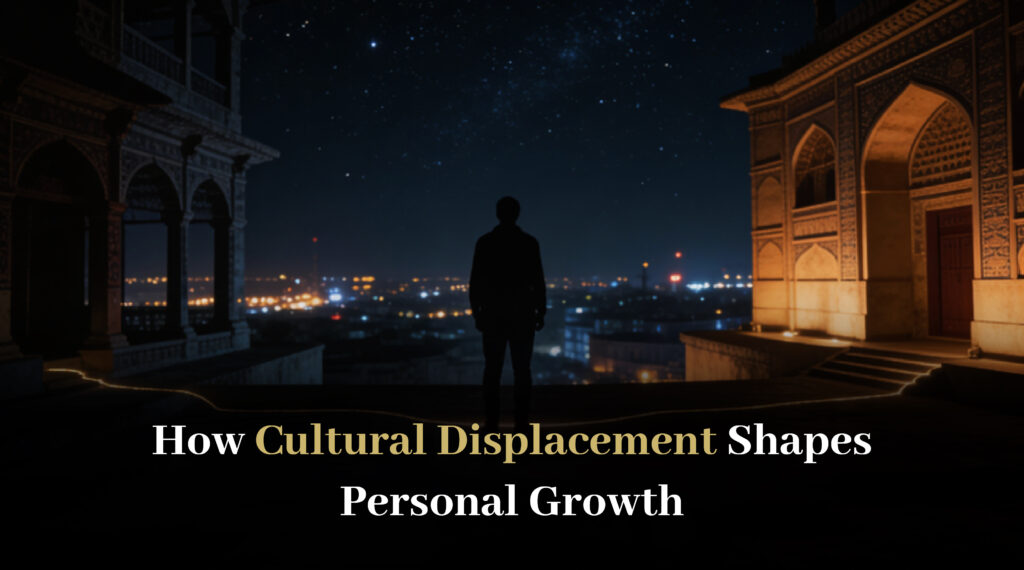
How Cultural Displacement Shapes Personal Growth

Introduction Cultural displacement is an experience shared by millions of people across the world. It happens when individuals move away from familiar environments and find themselves adjusting to new cultures, traditions, and social expectations. This shift can occur due to migration, education, work, or even social change within one’s own country. While the experience can feel unsettling, it often becomes a powerful force for personal growth. In a rapidly globalizing world, cultural displacement is no longer rare. People frequently cross borders, both physical and emotional, and with each move comes a need to adapt. Although displacement can initially create confusion and loss, it also opens doors to self discovery. It challenges individuals to redefine who they are and what they value. This process reveals an important truth. Roots and belonging matter, especially when they are tested by change. Understanding displacement helps explain how people grow stronger, more aware, and more resilient through unfamiliar experiences. Cultural Displacement Means Cultural displacement does not only refer to moving to another country. It can also occur when traditions fade, communities change, or social norms shift. When people feel out of place in their surroundings, they experience a gap between what is familiar and what is new. This gap often leads to discomfort. Language barriers, different customs, and unfamiliar expectations can make daily life feel exhausting. People may feel invisible or misunderstood. However, these challenges also force individuals to observe, learn, and reflect in ways they might never have before. Over time, cultural displacement pushes people to become more aware of their surroundings and of themselves. They begin to question assumptions they once took for granted. This questioning becomes the foundation for growth. Emotional Impact of Displacement The emotional effects of cultural displacement can be intense. Feelings of loneliness, nostalgia, and uncertainty are common. People often miss familiar routines, food, language, and social connections. This emotional distance can feel overwhelming, especially during the early stages of adjustment. At the same time, displacement creates emotional depth. Individuals learn to sit with discomfort and process complex feelings. They develop patience and emotional intelligence as they navigate unfamiliar situations. These skills are not easily gained in comfort zones. During this phase, roots and belonging matter deeply. Remembering one’s background provides emotional stability. It acts as an anchor when everything else feels uncertain. People who stay connected to their roots often find it easier to move forward without losing themselves. Growth Through Adaptation Adaptation is one of the strongest outcomes of cultural displacement. When people are placed in unfamiliar environments, they are required to adjust how they communicate, behave, and think. This adjustment encourages flexibility and open mindedness. Through adaptation, individuals develop problem solving skills and resilience. Everyday challenges such as navigating public spaces or understanding social cues become learning opportunities. Each small success builds confidence. Adaptation also teaches humility. People learn that there are many ways to live, think, and express values. This awareness reduces judgment and increases empathy. Growth occurs not because displacement is easy, but because it demands effort and reflection. Rediscovering Identity Cultural displacement often leads people to rediscover their identity. When familiar labels and roles disappear, individuals are left to define themselves in new ways. This process can feel uncomfortable, but it is also empowering. Away from familiar expectations, people explore aspects of themselves that were previously overlooked. They may reconnect with cultural traditions they once ignored or develop new interests shaped by their new environment. Identity becomes layered rather than fixed. This rediscovery reinforces the idea that roots and belonging matter, even when identity evolves. People do not lose themselves through displacement. Instead, they expand their sense of self by blending past experiences with present realities. Strengthening Perspective One of the most lasting effects of cultural displacement is a broadened perspective. Exposure to different cultures challenges narrow viewpoints and encourages understanding. Individuals begin to see global issues through multiple lenses. This expanded perspective improves communication and collaboration. People who have experienced displacement are often better listeners and more thoughtful in their interactions. They understand the importance of context and sensitivity. Such perspective also strengthens personal values. When individuals compare different ways of life, they become clearer about what truly matters to them. This clarity guides decisions and relationships long after the displacement experience ends. In this way, roots and belonging matter not as limitations, but as reference points that help individuals navigate a complex world. Conclusion Cultural displacement is rarely easy, but it is deeply transformative. While it can bring emotional challenges and moments of uncertainty, it also encourages personal growth, resilience, and self awareness. Through adaptation and reflection, individuals emerge with a stronger sense of identity and purpose. Displacement teaches that growth often begins where comfort ends. It pushes people to look inward while engaging openly with the world around them. By staying connected to their roots while embracing change, individuals create balance within themselves. Cultural displacement shapes people into more compassionate, adaptable, and grounded individuals. It reminds us that growth is not about losing where we come from, but about understanding how our experiences shape who we become.

Cedric Muhikira
Immigrant Stories, LIBAAX - Immigrant Journeys

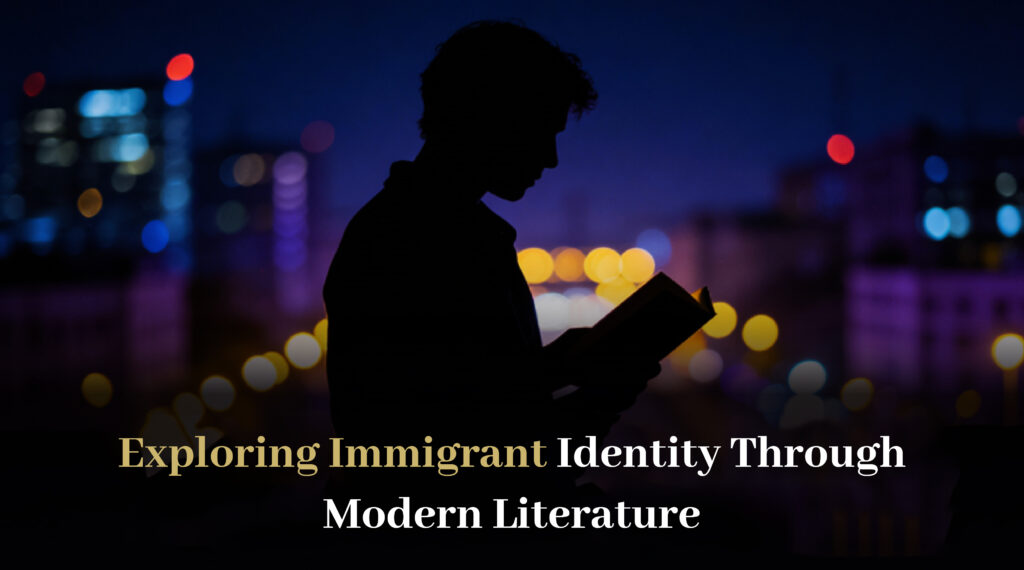
Exploring Immigrant Identity Through Modern Literature

Introduction Modern literature has become one of the most powerful spaces for exploring migration, belonging, and self discovery. As people move across borders for safety, education, or opportunity, their stories follow them. These stories often find their way into novels, essays, and memoirs, allowing readers to experience migration not as statistics, but as lived reality. At the center of many of these works lies a recurring theme: Immigrant Identity. It reflects the emotional journey of individuals who must navigate unfamiliar cultures while carrying the weight of their past. Literature gives voice to these experiences, offering insight into how identity shifts, stretches, and sometimes fractures in a new land. By examining modern literature, we gain a deeper understanding of how immigrants see themselves and how they are seen by the societies they enter. These narratives help bridge the gap between cultures by turning personal struggle into shared understanding. Literature as a Mirror of Migration Stories about migration have existed for centuries, but modern literature presents them with new depth and honesty. Writers today focus less on arrival and more on what happens afterward. The internal conflicts, quiet moments, and daily negotiations of identity take center stage. Modern authors often write from personal experience or inherited memory. Their stories reflect the uncertainty of leaving home, the hope of beginning again, and the confusion of existing between cultures. Through these narratives, literature becomes a mirror that reflects the emotional truth of migration. Rather than portraying immigrants as outsiders alone, these works show them as complex individuals shaped by multiple worlds. This portrayal challenges stereotypes and allows readers to see migration as a deeply human experience rather than a political issue. In many novels, Immigrant Identity is not presented as a problem to be solved, but as a reality to be understood. The focus is on growth, adaptation, and resilience rather than loss alone. Characters Between Two Worlds One of the most common themes in modern immigrant literature is the feeling of living between two worlds. Characters often struggle to balance the culture of their homeland with the expectations of their new society. This tension influences relationships, career choices, and self perception. These characters may speak one language at home and another outside. They may follow traditions privately while adapting publicly. Literature captures these contrasts with honesty and empathy, allowing readers to witness the emotional weight of such choices. What makes these stories powerful is their universality. Even readers who have never migrated can relate to the feeling of not fully belonging. Through character driven narratives, authors show that identity is rarely fixed. It evolves through experience, conflict, and reflection. By presenting identity as layered rather than divided, modern literature helps redefine what it means to belong. It suggests that living between worlds can be a source of strength rather than confusion. Language Memory and Belonging Language plays a critical role in shaping identity. In many immigrant stories, language becomes both a bridge and a barrier. It connects characters to their roots while sometimes distancing them from their surroundings. Modern literature often explores how language carries memory. Words spoken in a mother tongue hold emotional depth, while new languages offer access to opportunity and acceptance. Characters may feel fluent in neither, existing in a space of translation rather than clarity. This struggle reflects a deeper search for belonging. Language becomes a symbol of Immigrant Identity, representing both loss and possibility. Writers use this theme to show how communication shapes relationships and self expression. Through poetry, dialogue, and internal monologue, authors capture the emotional complexity of navigating multiple languages. These moments add authenticity to immigrant narratives and highlight the intimate connection between language and identity. Why These Stories Matter Today In an increasingly global world, stories of migration are more relevant than ever. Modern literature allows readers to engage with experiences they may never live themselves. It fosters empathy by placing human emotion at the center of cultural difference. These stories challenge readers to question assumptions about belonging and nationality. They remind us that identity is not defined by borders alone, but by memory, choice, and connection. By reading immigrant narratives, societies gain a more inclusive understanding of who belongs and why. For immigrants themselves, seeing their experiences reflected in literature can be validating. It affirms that their struggles are seen and their voices matter. For younger generations, these stories provide guidance and reassurance during moments of self doubt. By exploring Immigrant Identity through literature, readers learn that identity is not something to protect from change, but something that grows through it. Conclusion Modern literature offers a powerful space for exploring migration and belonging. Through deeply personal stories, authors reveal the emotional realities of building a life in a new land. These narratives move beyond surface level representation to explore identity as a living, evolving experience. By reading and sharing these stories, we create space for understanding and connection. Literature reminds us that every immigrant journey is unique, yet universally human. The exploration of Immigrant Identity through modern literature helps redefine what it means to belong in a changing world. These stories do more than entertain. They educate, connect, and humanize. In doing so, they ensure that the voices of immigrants continue to shape the cultural narratives of today and tomorrow.

Journey of Migration
Cedric Mu, LIBAAX - Immigrant Journeys

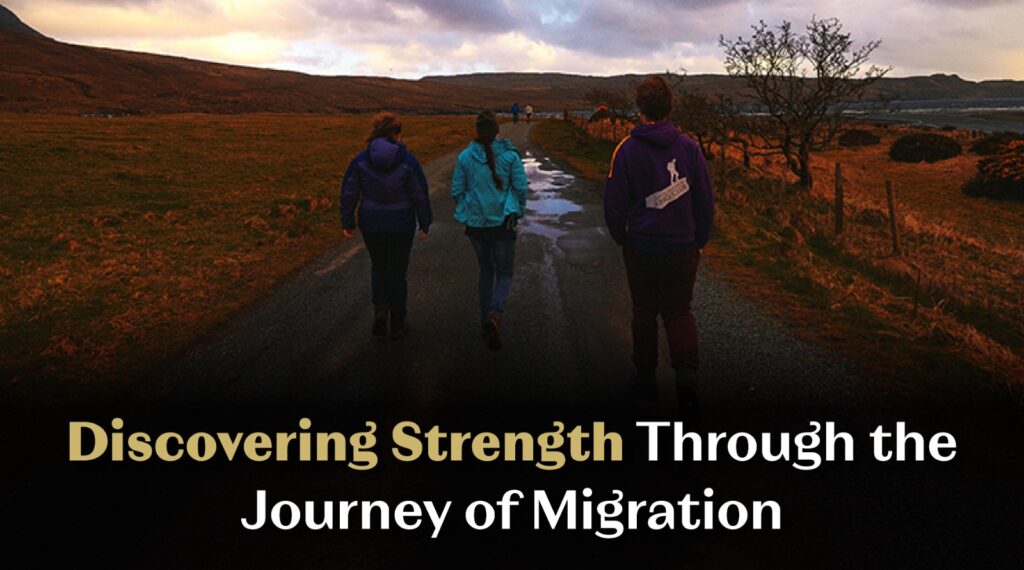
Discovering Strength Through the Journey of Migration

Migration has always been more than a movement of people—it is a profound transformation that reshapes identity, perspective, and opportunity. For individuals and families, migration represents a crossroads of challenge and possibility. In today’s hyperconnected global economy, discovering strength through the journey of migration reveals not only personal resilience but also the capacity to thrive in diverse and competitive environments. This article explores how migration transforms lives, the role of technology in easing transitions, and the professional and personal strengths individuals uncover during this life-changing journey. Migration as a Catalyst for Personal Transformation At its core, migration is about adaptation. Leaving behind familiar surroundings often requires recalibrating one’s sense of belonging and redefining goals. For many, this process reveals hidden layers of resilience, adaptability, and perseverance. The journey of migration is often marked by uncertainty—navigating new legal systems, mastering languages, and adjusting to unfamiliar cultural frameworks. Yet, within these challenges lies the opportunity for growth. Each step forward, no matter how small, builds confidence and resilience. Migrants discover that their ability to adapt is a strength, one that extends beyond survival into innovation and leadership. Discovering Strength in Resilience The process of resettlement highlights resilience as one of the most powerful outcomes of migration. Resilience does not mean the absence of difficulty—it is the capacity to face difficulty while still moving toward progress. In corporate terms, resilience is the equivalent of maintaining operational stability in volatile markets. For individuals, discovering strength through the journey of migration means remaining optimistic despite setbacks, leveraging creativity to overcome resource limitations, and consistently finding ways to move forward. This resilience often becomes a defining trait, positioning migrants as problem-solvers, leaders, and innovators in both personal and professional spaces. Technology as an Enabler of Strength Unlike earlier eras, today’s migrants have access to tools that make adaptation more seamless. Technology has become the bridge between displacement and opportunity. Digital platforms enable access to remote learning, professional networking, and community-building resources, significantly reducing the isolation that once defined migration experiences. For example: By harnessing technology, individuals accelerate their integration while simultaneously discovering strength in digital literacy, adaptability, and global engagement. Professional Growth Through Migration Migration is often seen as a personal journey, but it has significant professional implications as well. Global organizations increasingly value diversity of thought, adaptability, and cross-cultural competencies—all of which are cultivated during migration. Employers recognize that individuals who have navigated the journey of migration bring critical soft skills to the table: problem-solving under pressure, emotional intelligence, and cultural sensitivity. These strengths directly align with the competencies needed to succeed in fast-paced, tech-driven industries. In fact, discovering strength during migration often translates into entrepreneurial drive. Many migrants launch businesses that fuse cultural heritage with innovative practices, creating value in both their local and global markets. The Emotional Dimension of Migration While migration builds professional capacity, it also reshapes emotional resilience. Leaving one’s homeland often involves separation from family, traditions, and familiar comforts. This emotional toll, while challenging, also encourages growth in empathy, patience, and adaptability. Psychologists note that individuals who successfully navigate migration often emerge with enhanced emotional intelligence. This ability to manage stress, embrace uncertainty, and empathize with others becomes an asset in both personal relationships and corporate environments. The emotional journey is equally about rediscovering joy—celebrating small wins, integrating cultural traditions in new spaces, and building meaningful connections. Through these moments, strength is not just discovered but also sustained. Community as a Source of Strength One of the most powerful ways migrants discover strength is through community. Whether it’s local support groups, professional mentorship programs, or cultural organizations, community networks provide both emotional and practical resources. Communities amplify resilience. They create a sense of belonging, offer guidance on navigating systems, and provide platforms for collective growth. Many migrant communities have transformed entire neighborhoods, reviving economies and enriching cultures with diversity and creativity. For individuals, this collective journey ensures that strength is not isolated but multiplied, offering both individual and shared empowerment. Redefining Identity in a New Landscape Migration often prompts individuals to reflect deeply on their identity. In a new cultural and professional landscape, they are challenged to integrate their heritage with emerging opportunities. This balance creates a hybrid identity—one that is both rooted and adaptive. This redefined identity reflects the ultimate discovery of strength: the ability to honor one’s past while shaping a dynamic future. It is a process that encourages innovation, cross-cultural dialogue, and leadership that transcends boundaries. Strategies for Leveraging the Strength of Migration For those navigating the journey of migration, strength can be cultivated and strategically applied. Here are five actionable approaches: These strategies ensure that the strength discovered during migration is not temporary but a long-term asset for both personal and professional success. Conclusion Migration is not simply about relocation—it is about transformation. It reshapes identity, builds resilience, and uncovers strengths that might otherwise remain hidden. In a global economy where adaptability and innovation are critical, the lessons from migration provide a roadmap for success. Ultimately, discovering strength through the journey of migration demonstrates that challenges can be reframed as opportunities, and displacement can lead to empowerment. Whether in personal life or corporate environments, the resilience and growth cultivated through migration are not just survival mechanisms—they are competitive advantages that define leaders of tomorrow.

Cedric Mu
LIBAAX - Immigrant Journeys, LIBAAX Book Insights

Voices Across Borders: The Stories Behind LIBAAX – Grow Your Roots Where You Land

In a world where borders are both physical and metaphorical, where lines on a map can define destinies and dreams, there emerges a voice that seeks to transcend them all. That voice belongs to Cedric Mu, a storyteller with a heart as expansive as the journeys he chronicles in his debut book, LIBAAX – Grow Your Roots Where You Land. This is not just a book; it is a tapestry woven from the threads of immigrant lives—each thread a story, each story a testament to resilience, hope, and the unyielding human spirit. In this blog, we dive deep into the stories behind LIBAAX, exploring how Cedric Mu has crafted a literary haven where the voices of immigrants resonate, unfiltered and unapologetic, across borders and into our hearts. Imagine a young child, suitcase in hand, stepping onto unfamiliar soil, where the language sounds like a melody they cannot yet hum, and the air carries the scent of a life they must learn to call home. Or picture an elder, their eyes tracing the horizon of a new land, carrying memories of a past left behind yet holding fast to dreams of a future unwritten. These are the souls Cedric Mu brings to life in LIBAAX – Grow Your Roots Where You Land. Cedric Mu’s journey as an author began not with a pen, but with a listening ear. Growing up, he was surrounded by stories—not the kind found in storybooks, but the raw, unpolished narratives of people who had crossed oceans and continents to start anew. Friends, neighbors, and strangers shared tales of leaving behind homes, families, and familiar streets, all in pursuit of something better, something safer, something possible. These stories, Cedric realized, were not just anecdotes; they were legacies, each one a brick in the foundation of a new identity. “Immigrants are not just statistics or headlines; they are storytellers, dreamers, builders of worlds.” In LIBAAX, Cedric weaves together a collection of narratives that span cultures, continents, and experiences. This phrase is both a call to resilience and a celebration of adaptability. It speaks to the immigrant’s ability to find home in the unfamiliar, to cultivate belonging in the face of uncertainty. Each chapter of the book introduces readers to a different voice—a mother from Syria, a student from Nigeria, a carpenter from Mexico—each story a brushstroke in a larger portrait of humanity. What makes LIBAAX so compelling is Cedric’s ability to capture the universal in the specific. He doesn’t shy away from the hardships—language barriers, discrimination, the ache of homesickness—but he also illuminates the triumphs: the first job secured, the community built, the child who graduates with honors in a language they once couldn’t speak. One particularly poignant story follows Amina, a young woman who fled conflict in her homeland only to face new battles in a foreign city. Through Cedric’s vivid prose, we feel her fear, her determination, and ultimately, her joy as she opens a small bakery, her recipes a bridge between her past and her present. “I wanted readers to see the strength in these stories,” Cedric explains, “to understand that every immigrant’s journey is a hero’s journey.” The creation of LIBAAX was no small feat. Cedric spent years researching, interviewing, and immersing himself in the communities whose stories he sought to tell. He traveled to community centers, sat in living rooms, and listened at kitchen tables, collecting fragments of lives that would become the heart of his book. “It was humbling,” he recalls. “Each person trusted me with their story, and I felt a responsibility to honor that trust.” This dedication shines through in the book’s authenticity, its refusal to sanitize or simplify the immigrant experience. Cedric’s prose is lyrical yet grounded, weaving together hope and hardship with a poet’s touch and a journalist’s precision. Beyond its storytelling, LIBAAX is a call to action. Cedric hopes his book will spark conversations about immigration, challenging stereotypes and fostering empathy. “These stories belong to all of us,” he says. “They remind us that our differences are what make us human, and our shared struggles are what bind us.” In a time when immigration remains a polarizing topic, LIBAAX offers a refreshing perspective: it is not about policies or borders, but about people—people who laugh, cry, dream, and persevere. For readers, LIBAAX – Grow Your Roots Where You Land is an invitation to listen. It’s a chance to walk in someone else’s shoes, to see the world through eyes that have seen both loss and possibility. Cedric Mu’s debut is more than a book; it’s a movement, a chorus of voices that refuse to be silenced. Whether you’re an immigrant yourself, the child of one, or simply someone who believes in the power of stories, LIBAAX will leave you inspired, moved, and perhaps a little more connected to the world around you. To experience these stories for yourself, pick up a copy of LIBAAX – Grow Your Roots Where You Land at your local bookstore or online. Follow Cedric Muhikira on social media for updates on book events and readings, and join the conversation about the immigrant experience. As Cedric reminds us, “Every story matters, and every voice deserves to be heard.” Let LIBAAX be the beginning of that listening.

Cedric Muhikira
Cedric Mu, LIBAAX - Immigrant Journeys

Cedric Mu’s LIBAAX – Grow Your Roots Where You Land: A Celebration of Immigrant Narratives

Imagine a world where every journey, every sacrifice, and every dream finds a voice—a world where the stories of those who cross borders, carrying their hopes in weathered suitcases, are not just heard but celebrated. This is the world Cedric Mu builds in their breathtaking debut book, LIBAAX – Grow Your Roots Where You Land. With a title that sings of resilience and belonging, this book is more than a collection of tales; it’s a vibrant tapestry woven from the threads of immigrant lives, each stitch a testament to the courage it takes to plant new roots in unfamiliar soil. In LIBAAX, Cedric Mu doesn’t just tell stories—they amplify voices that have too often been drowned out, inviting readers to listen, feel, and understand the heartbeat of the immigrant experience. A Storyteller with a Purpose Cedric Mu, a storyteller with a soul as expansive as the horizons their characters chase, has crafted a work that feels like a love letter to those who dare to begin anew. The word “LIBAAX,” evocative and poetic, hints at the book’s essence: a call to grow, to thrive, to claim a place in the world no matter where life’s winds carry you. Mu’s passion for voicing immigrants’ stories shines through every page, transforming LIBAAX into a beacon for readers who crave narratives that are raw, real, and profoundly human. This isn’t just a book—it’s a movement, a celebration of the indomitable spirit that defines those who leave behind the familiar to forge a future. Capturing the Kaleidoscope of Immigrant Experiences What makes LIBAAX – Grow Your Roots Where You Land so extraordinary is its ability to capture the kaleidoscope of immigrant experiences. From the bustling markets of a far-off homeland to the quiet struggles of a new city, Mu’s stories traverse continents and cultures, each one a unique melody in a grand symphony of survival and hope. There’s the tale of Amina, a mother who carries her children across borders, her dreams for them heavier than the bags she lugs; or Javier, a young artist who paints his past on city walls, each stroke a bridge between who he was and who he’s becoming. These characters, drawn with Mu’s tender precision, are not just figments of imagination—they’re reflections of real lives, real struggles, and real triumphs. A Masterclass in Empathy and Storytelling Cedric Mu’s storytelling is a masterclass in empathy. Their prose dances between the lyrical and the grounded, painting vivid scenes that linger in the mind like the scent of spices from a childhood kitchen. In one chapter, you might find yourself walking alongside a family through a dusty border town, the weight of their choices pressing against your chest. In another, you’re laughing with a group of friends in a cramped apartment, their shared stories stitching them closer than blood ever could. Mu doesn’t shy away from the hard truths—prejudice, loss, the ache of displacement—but they also illuminate the joy, the resilience, and the unbreakable bonds that define immigrant communities. It’s this balance that makes LIBAAX so compelling: it’s a mirror for those who see themselves in its pages and a window for those who seek to understand. Who is Cedric Mu? But who is Cedric Mu, the visionary behind this literary gem? A writer with a heart attuned to the world’s quiet voices, Mu’s own journey mirrors the themes of their book. In LIBAAX, they achieve this with a grace and power that marks them as a literary force to watch. This debut isn’t just a book—it’s the beginning of a legacy. Why LIBAAX Matters Today Why does LIBAAX – Grow Your Roots Where You Land matter now? It challenges readers to see immigrants not as statistics or stereotypes, but as individuals with dreams as vivid as their own. Each story in LIBAAX is a call to action—to listen, to empathize, to celebrate the courage it takes to grow roots in new land. Mu’s narratives don’t just entertain; they inspire, urging us to build a world where every voice is valued, every story cherished. The Power of Resilience – Grow Your Roots Where You Land The book’s title, Grow Your Roots Where You Land, is a mantra for resilience, a reminder that home is not just a place but a state of being. It’s a message that resonates deeply in today’s fractured world, where so many are searching for belonging. Cedric Mu invites readers to join this journey, to walk alongside their characters and discover the beauty of lives built from scratch. Whether you’re an immigrant yourself, a descendant of one, or simply a lover of stories that stir the soul, LIBAAX offers something profound: a chance to see the world through eyes that have seen both loss and hope. A Transformative Reading Experience As you turn the pages of LIBAAX – Grow Your Roots Where You Land, you’ll find yourself changed. Cedric Mu’s debut is a celebration of immigrant narratives, yes, but it’s also a celebration of what it means to be human—to struggle, to dream, to thrive. This book is a gift, a vibrant mosaic of voices that will echo in your heart long after the final chapter. So, pick up a copy, dive into its pages, and let Cedric Mu show you the power of stories that refuse to be silenced. LIBAAX is here, and it’s ready to change the way you see the world.

Cedric Mu’s LIBAAX
Immigrant Stories, LIBAAX - Immigrant Journeys

Cedric Mu’s Journey in LIBAAX: Grow Your Roots Where You Land

I remember the first time I heard qaraami music—those lilting Somali melodies that hum like a heartbeat, weaving stories of love, loss, and longing. I was a kid, straddling two worlds, my feet planted in the cracked sidewalks of Detroit and my heart tethered to a homeland I barely knew. That music, those stories, they became my anchor. Years later, sitting at my desk with a notebook full of scribbles and a playlist looping through trap beats and qaraami, I realized I wasn’t just writing a book. I was spinning a mixtape of lives—lives like Ayaan’s, the heart of LIBAAX: Grow Your Roots Where You Land. Cedric Mu’s Vision for LIBAAX When I started writing LIBAAX, I didn’t set out to tell a grand tale of triumph or tragedy. I wanted to capture the in-between—the dishwashing shifts that leave your hands raw, the fleeting glances with a stranger who might become home, the way a single vinyl record can hold an entire life’s worth of memories. Ayaan, my protagonist, is a Somali immigrant who lands in Detroit with a civil engineering degree and a suitcase full of dreams. But life doesn’t unfold like a blueprint. He’s scrubbing dishes, spinning records, and riding his motorcycle—named Libaax, Somali for lion—through a city that’s as gritty and resilient as he is. When a last-minute DJ gig thrusts him into Detroit’s underground music scene, Ayaan begins to remix his identity, layering Somali qaraami with trap beats, finding his rhythm in a place that feels both foreign and alive. The Personal Heart of Cedric Mu’s LIBAAX This book is personal. I’ve lived the ache of being “almost understood,” of navigating a language that doesn’t quite fit your tongue, of carrying a culture that feels like a secret you’re bursting to share. Growing up between worlds, I saw how immigrant stories are often flattened into stereotypes—either tales of heroic success or relentless struggle. But life isn’t that binary. It’s messy, vibrant, and pulsing with moments that don’t make headlines: the late-night conversations with friends like Ahmed, a reformed pirate with a quick laugh, or Maria, a law student who becomes family. Then there’s the fleeting romance with Isabeli, a bartender whose fire matches Ayaan’s own. And the way a motorcycle’s roar or a perfectly mixed track can make you feel elemental—like “a streak of fire painting sagas on the asphalt.” Cedric Mu’s Bridge to Immigrant Stories Writing LIBAAX was like building a bridge. I drew from the resilience I saw in Detroit’s diaspora communities—first-generation youth, former refugees, people piecing themselves together in unfamiliar terrain. I spent hours talking to them, listening to their stories of displacement, joy, and defiance. Those conversations shaped Ayaan’s journey, but they also shaped me. One night, while writing the scene of Ayaan’s first DJ gig, I blasted qaraami and trap mixes, trying to capture the sensory overload of a crowded club—the sweat, the bass, the flicker of lights. It felt like I was there, spinning alongside him, balancing the weight of memory with the thrill of creation. The challenge was staying honest, not romanticizing or pitying the immigrant experience but showing it as it is: raw, complicated, and beautiful. Themes in LIBAAX LIBAAX isn’t just Ayaan’s story—it’s a tapestry of themes that resonate deeply with me.Displacement and identity take center stage—how we rebuild ourselves when everything familiar is gone. Music becomes a form of resistance, a way to carry home in your bones. The story explores belonging and rootlessness, capturing the pain and poetry of seeking a place to call your own. It also delves into masculinity and vulnerability, portraying men like Ayaan who dare to feel deeply. And it’s about chosen family—those unexpected connections that anchor us when the world feels unsteady. Why Read Cedric Mu’s LIBAAX? This book is for anyone who’s ever felt caught between worlds, whether you’re an immigrant, a dreamer, or someone who loves stories that pulse with life. It’s for readers who crave lyrical prose, emotional depth, and characters who linger like a song you can’t stop humming. Educators, social workers, and students of diaspora studies will find something profound here, but so will anyone who believes in the power of storytelling to build empathy and connection. What Makes LIBAAX Unique? What makes LIBAAX unique? It’s not just about surviving—it’s about remixing culture, rebuilding joy, and forging new rhythms in unfamiliar places. The prose shifts like a DJ’s set, sometimes an internal monologue, sometimes cinematic, always immersive. It’s unapologetically poetic, blending the grit of urban fiction with the soul of multicultural literature. I hope it challenges readers to see immigrants not as “others” but as fully human—funny, flawed, fierce, and luminous. For immigrants and their children, I hope it feels like a mirror. For others, I hope it’s a window into lives too often overlooked. Connect with Cedric Mu and LIBAAX As I share LIBAAX with the world, I’m thrilled to connect with readers through digital Zoom readings, book club visits, and a book signing at a Detroit indie bookstore this fall. These events are more than promotions—they’re chances to talk about migration, identity, and the stories we carry. Stay tuned for dates and details on my website, cedricmuhikira.com, or follow me on social media for updates. You can find LIBAAX: Grow Your Roots Where You Land on Amazon, and I hope it finds its way into your hands and heart. Cedric Mu’s Love Letter to Immigrants This book is my mixtape, my love letter to the immigrant experience. It’s Ayaan’s story, my story, and the story of countless others who grow their roots where they land. I hope it resonates with you, like a beat that lingers long after the song ends.

Scroll to Top