Cedric Mu

Self Though
Cedric Mu, LIBAAX Book Insights

Self Taught Authors Cedric Muhikira’s Path to Authorship

The influence of self taught authors has been profound throughout literary history. In this sphere of self taught talent, the story of Cedric Muhikira stands out. His journey as a writer is a testament to the power of personal determination, the courage to persist against uncertainty, and the profound growth that comes from embracing one’s own path. Muhikira’s evolution culminated in the creation of Libaax: Grow Your Roots Where You Land, a work that exemplifies the voice of a writer who has cultivated his craft through deliberate effort, reflection, and unwavering commitment. Cedric Muhikira’s Journey Begins Cedric Muhikira’s path exemplifies the true spirit of self taught authors everywhere. His journey was not guided by formal curriculums, syllabi, or structured critique groups; it was shaped by the trials, reflections, and lessons he discovered independently. The journey of self taught authors is rarely smooth. Cedric faced this reality firsthand. Without a structured system to guide his steps, every new idea, every chapter, and every revision demanded self-assessment, critical thinking, and the willingness to accept constructive failure as a learning tool. Yet it was precisely these challenges that shaped him into a more thoughtful and deliberate storyteller. Lessons from Libaax In Libaax: Grow Your Roots Where You Land, Cedric Muhikira offers readers more than a personal narrative; he presents a roadmap for self discovery, growth, and the cultivation of one’s own creative identity. The book explores themes of identity, belonging, resilience, and the ability to thrive even in unfamiliar or challenging environments. Through his story, readers witness how Cedric established his creative footing without the safety net of a conventional literary path. Cedric’s realization of this principle was transformative. He understood that his voice, no matter how raw or unpolished in its early stages, carried intrinsic value. Discipline and Persistence Writing without formal guidance is not merely a creative challenge; it is a rigorous exercise in discipline and self-motivation. Cedric’s daily routine reflected a profound dedication to his craft. Each chapter he wrote, each draft he revised, was a testament to the power of consistent effort and personal accountability. One of the remarkable traits of self taught authors is their ability to think beyond conventional constraints. Freed from rigid academic expectations, Cedric experimented with narrative structures, stylistic choices, and storytelling techniques that felt natural to him. Independent Learning and Authenticity Self taught writers are, by necessity, lifelong learners. Cedric’s creative process extended beyond writing itself; it involved careful observation, extensive reading, and introspective reflection. He drew inspiration from his surroundings, community interactions, personal memories, and the broader human experience. Embracing Modern Publishing The publishing landscape has evolved dramatically, offering self taught writers unprecedented tools and opportunities. His journey was not limited to writing alone; it encompassed every stage of the publishing process, ensuring that his final work met professional standards and reached a wider audience. Conclusion Self taught authors like Cedric Muhikira enrich the literary world in ways that are distinct, compelling, and invaluable. They demonstrate that creativity is not the exclusive domain of formally trained individuals, and that meaningful, impactful writing can emerge from lived experience, curiosity, and dedicated practice. Cedric’s story serves as a lasting inspiration, proving that with commitment, reflection, and determination, self taught authors can leave an indelible mark on readers and the literary landscape alike.
New Land
Cedric Mu, Immigrant Stories

The Power of Resilience When Starting Over in a New Land

Relocating to a new land is more than just a geographic shift—it’s a transformation that touches every aspect of identity, ambition, and belonging. For many individuals, starting over in unfamiliar territory requires more than determination. It demands resilience, the ability to adapt, and the vision to turn challenges into opportunities. In today’s hyperconnected global economy, the power of resilience is not just a personal attribute but a professional advantage. Understanding Resilience in Context Resilience is often defined as the capacity to recover quickly from difficulties. But in the context of starting fresh in a new land, resilience extends beyond recovery. It becomes a framework for building a future where obstacles are transformed into stepping stones. From learning new languages to adapting to cultural norms, immigrants and global professionals continuously demonstrate that resilience is the cornerstone of sustainable growth. The digital age further amplifies this truth. With the aid of technology, individuals today can leverage online resources, remote opportunities, and digital communities to accelerate integration into a new ecosystem. This interconnected infrastructure makes the power of resilience measurable, actionable, and transformative. The Emotional Landscape of Transition Moving to a new land often brings emotional turbulence. The excitement of fresh beginnings is accompanied by uncertainty, homesickness, and cultural dissonance. Resilience is what enables individuals to balance these conflicting emotions while staying focused on long-term goals. Psychologists describe resilience not as the absence of stress but as the ability to manage it constructively. In corporate terms, this is equivalent to maintaining operational efficiency in the midst of market volatility. For individuals, it translates into the emotional strength to embrace diversity, remain flexible, and create pathways toward stability. Building Resilience through Cultural Integration Cultural integration is one of the most challenging yet rewarding aspects of starting anew. It requires unlearning familiar systems and embracing new ones. Food, language, social norms, and workplace expectations may differ drastically. For newcomers, resilience here means openness—the willingness to learn and engage. A resilient individual approaches cultural differences not as barriers but as opportunities to expand their worldview. For example, adapting Somali traditions in a Western context, or incorporating African storytelling into corporate innovation workshops, enriches both the individual and the community. This ability to merge old with new is where resilience transforms into influence. Technology as a Catalyst for Resilience In a data-driven economy, technology offers the ultimate toolkit for resilient adaptation. Online learning platforms provide opportunities to upskill quickly, while digital communication tools allow individuals to stay connected with family back home and foster a sense of belonging in their new land. Platforms like LinkedIn enable professionals to build networks across industries, while virtual communities create safe spaces for cultural exchange and mutual support. The power of resilience in this context is amplified by digital ecosystems that break down geographic barriers and accelerate integration. The Professional Edge of Resilience Corporations and startups alike value resilience as a core competency. In fact, global companies seek professionals who can navigate ambiguity, adapt to cross-cultural teams, and remain productive under pressure. For individuals starting anew, showcasing resilience on résumés, during interviews, and in networking conversations can set them apart. The immigrant experience exemplifies this. The process of starting over in a new land inherently cultivates traits such as problem-solving, perseverance, and adaptability. Employers recognize these as indicators of leadership potential. In short, resilience is not only a personal survival tool but also a professional accelerator. Resilience and the Power of Community Starting over can feel isolating, but resilient individuals understand the importance of building community. Local networks, cultural associations, and mentorship programs help newcomers find guidance, resources, and emotional support. Communities create a multiplier effect for resilience. When one individual thrives, they inspire others to do the same. The collective resilience of immigrant communities often transforms entire neighborhoods, revitalizing economies and driving innovation in their new land. Turning Challenges into Opportunities Every journey to a new land brings challenges—economic pressures, legal hurdles, and cultural barriers. But resilience reframes these challenges into opportunities for reinvention. A financial struggle becomes the motivation to launch a startup. A language barrier becomes the spark to learn communication skills that enhance global employability. This mindset shift embodies the essence of resilience: seeing obstacles not as setbacks but as springboards toward success. Practical Strategies for Cultivating Resilience For individuals starting fresh, resilience can be actively cultivated. Here are key strategies: By applying these strategies, individuals can not only survive but thrive in their new environments. Conclusion Starting over in a new land is a journey that tests courage, patience, and adaptability. Yet it is resilience—the power to transform challenges into growth—that ultimately defines success. In both personal and professional domains, resilience is the bridge between uncertainty and achievement. For individuals navigating new beginnings, resilience is more than just survival. It is the foundation for innovation, leadership, and cultural contribution. In a world where mobility and migration are integral to progress, the power of resilience remains the ultimate competitive advantage.

Ced Muhi Writing
Cedric Mu, LIBAAX Book Insights

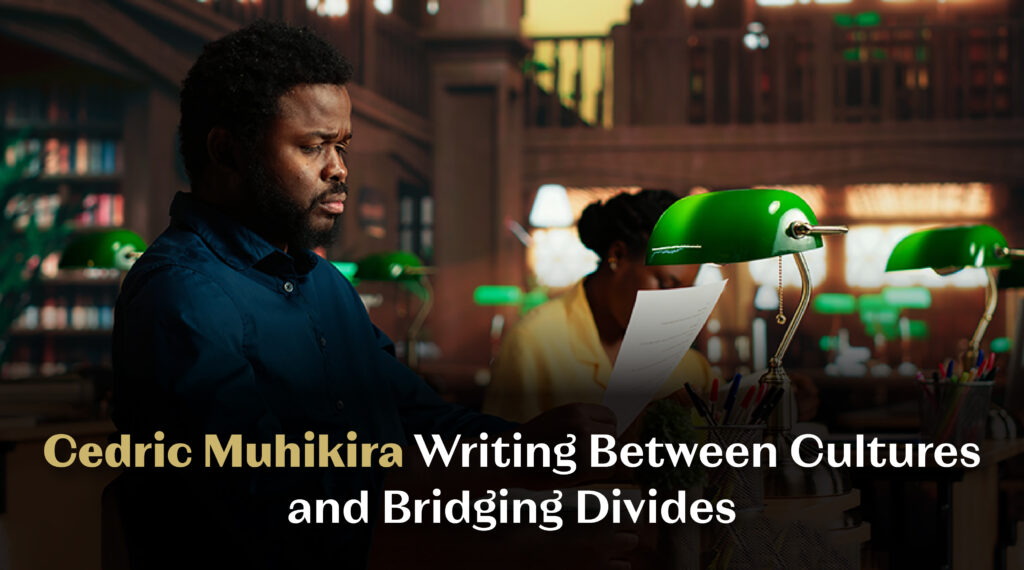
Cedric Muhikira Writing Between Cultures and Bridging Divides

In an era defined by globalization, rapid digital transformation, and interconnected professional networks, the ability to bridge cultural divides has become more than a personal skill—it is a corporate necessity. Diversity and inclusion are no longer just aspirational values but essential components of organizational success. At the heart of these conversations is Cedric Muhikira, whose work exemplifies how writing between cultures can shape understanding, foster inclusivity, and empower both individuals and corporations. Through his reflections and narratives, Muhikira explores the complexities of identity, belonging, and resilience. His writing not only addresses personal experiences but also offers a framework for organizations navigating multicultural workforces and global markets. By bridging divides through storytelling, he demonstrates how cultural differences can transform into opportunities for growth, collaboration, and innovation. The Power of Writing Between Cultures Writing has always been a medium for connection, but in Muhikira’s work, it becomes a strategic tool for bridging divides. His narratives transcend geographic borders, giving voice to experiences that many individuals face when navigating multiple cultural identities. In corporate terms, this reflects a vital reality: organizations are microcosms of cultural intersections. Global companies employ talent from diverse backgrounds, each bringing unique stories, values, and perspectives. Writing between cultures, as exemplified by Cedric Muhikira, demonstrates how these differences can be harmonized to create stronger, more innovative teams. Muhikira’s approach is not about erasing cultural distinctions but about acknowledging them, amplifying them, and integrating them into broader narratives of belonging. This mirrors the corporate need for inclusive practices that honor individuality while driving collective performance. Bridging Divides in a Corporate Context In today’s corporate environment, divides often emerge not just from geography but from miscommunication, lack of cultural awareness, and fragmented organizational practices. These divides can hinder collaboration, reduce employee engagement, and even stifle innovation. Muhikira’s insights provide actionable lessons for addressing these divides: Cedric Muhikira’s Tech-Savvy Perspective What makes Muhikira’s contribution especially relevant to today’s corporate audience is his ability to contextualize cultural divides within the digital era. Writing between cultures is not confined to print or traditional storytelling; it extends into digital platforms where identity and belonging are continuously negotiated. Social media, professional networking platforms, and digital collaboration tools amplify cultural intersections, creating both opportunities and challenges. Muhikira’s insights align with the corporate need to manage digital workspaces inclusively. For example, a globally distributed team collaborating on cloud platforms must navigate cultural nuances in communication styles, decision-making, and feedback. By recognizing these dynamics, organizations can adopt strategies that bridge divides digitally—ensuring that employees feel connected whether they are in headquarters or halfway across the globe. The Role of Storytelling in Organizational Growth Storytelling is not just a literary device—it is a corporate strategy. Muhikira’s writing demonstrates how personal stories can illuminate larger truths about identity, migration, and resilience. In business, storytelling can be leveraged to: By embracing storytelling in the way Muhikira has modeled, companies can transform cultural divides into strengths, reinforcing their global competitiveness. Identity and Belonging Across Borders Central to Muhikira’s work is the idea that identity is fluid, particularly for individuals living between cultures. This resonates deeply in corporate environments where employees often balance professional roles with personal identities shaped by migration, heritage, and cultural traditions. Muhikira highlights the importance of embracing this fluidity rather than resisting it. For corporations, this translates into policies and practices that respect employees’ identities while integrating them into collective organizational goals. Companies that prioritize belonging see higher engagement, productivity, and retention—outcomes directly linked to corporate success. Lessons for Global Leadership Leaders navigating global markets can learn significantly from Muhikira’s writing. Bridging divides is not just about managing differences but about leveraging them strategically. Leaders who internalize these lessons can: Muhikira’s work illustrates that leadership in the 21st century requires cultural sensitivity as much as technical expertise. Corporate Applications of Bridging Divides Organizations can integrate the principles of Muhikira’s writing in several ways: Why Cedric Muhikira’s Work Matters Now In a world increasingly shaped by migration, remote work, and global business operations, cultural divides are both inevitable and significant. Cedric Muhikira’s writing between cultures provides a roadmap for turning those divides into opportunities. His work underscores a critical corporate truth: inclusivity drives innovation, resilience, and growth. By adopting his perspectives, organizations can transform into spaces where differences are not just tolerated but celebrated. Conclusion Cedric Muhikira’s writing exemplifies the art and strategy of bridging divides. By exploring identity and belonging across cultures, he offers insights that are as relevant to individuals as they are to corporations. His work demonstrates that bridging divides is not about eliminating differences but about finding strength in them. For the corporate world, this is an urgent call to action. Companies must embrace diversity not as a checkbox but as a strategic advantage. By fostering belonging, amplifying stories, and leveraging cultural intelligence, organizations can build inclusive ecosystems that thrive in the global marketplace. For individuals, Muhikira’s message is equally powerful: writing between cultures is an opportunity to grow, connect, and lead. It is a reminder that identity is not confined by borders and that divides can be bridged with empathy, resilience, and authenticity. In today’s digital-first, interconnected world, Cedric Muhikira’s work is both timely and transformative. By bridging divides, we not only create inclusive workplaces but also shape a future where diversity is a source of collective strength.

Journey of Migration
Cedric Mu, LIBAAX - Immigrant Journeys

Discovering Strength Through the Journey of Migration

Migration has always been more than a movement of people—it is a profound transformation that reshapes identity, perspective, and opportunity. For individuals and families, migration represents a crossroads of challenge and possibility. In today’s hyperconnected global economy, discovering strength through the journey of migration reveals not only personal resilience but also the capacity to thrive in diverse and competitive environments. This article explores how migration transforms lives, the role of technology in easing transitions, and the professional and personal strengths individuals uncover during this life-changing journey. Migration as a Catalyst for Personal Transformation At its core, migration is about adaptation. Leaving behind familiar surroundings often requires recalibrating one’s sense of belonging and redefining goals. For many, this process reveals hidden layers of resilience, adaptability, and perseverance. The journey of migration is often marked by uncertainty—navigating new legal systems, mastering languages, and adjusting to unfamiliar cultural frameworks. Yet, within these challenges lies the opportunity for growth. Each step forward, no matter how small, builds confidence and resilience. Migrants discover that their ability to adapt is a strength, one that extends beyond survival into innovation and leadership. Discovering Strength in Resilience The process of resettlement highlights resilience as one of the most powerful outcomes of migration. Resilience does not mean the absence of difficulty—it is the capacity to face difficulty while still moving toward progress. In corporate terms, resilience is the equivalent of maintaining operational stability in volatile markets. For individuals, discovering strength through the journey of migration means remaining optimistic despite setbacks, leveraging creativity to overcome resource limitations, and consistently finding ways to move forward. This resilience often becomes a defining trait, positioning migrants as problem-solvers, leaders, and innovators in both personal and professional spaces. Technology as an Enabler of Strength Unlike earlier eras, today’s migrants have access to tools that make adaptation more seamless. Technology has become the bridge between displacement and opportunity. Digital platforms enable access to remote learning, professional networking, and community-building resources, significantly reducing the isolation that once defined migration experiences. For example: By harnessing technology, individuals accelerate their integration while simultaneously discovering strength in digital literacy, adaptability, and global engagement. Professional Growth Through Migration Migration is often seen as a personal journey, but it has significant professional implications as well. Global organizations increasingly value diversity of thought, adaptability, and cross-cultural competencies—all of which are cultivated during migration. Employers recognize that individuals who have navigated the journey of migration bring critical soft skills to the table: problem-solving under pressure, emotional intelligence, and cultural sensitivity. These strengths directly align with the competencies needed to succeed in fast-paced, tech-driven industries. In fact, discovering strength during migration often translates into entrepreneurial drive. Many migrants launch businesses that fuse cultural heritage with innovative practices, creating value in both their local and global markets. The Emotional Dimension of Migration While migration builds professional capacity, it also reshapes emotional resilience. Leaving one’s homeland often involves separation from family, traditions, and familiar comforts. This emotional toll, while challenging, also encourages growth in empathy, patience, and adaptability. Psychologists note that individuals who successfully navigate migration often emerge with enhanced emotional intelligence. This ability to manage stress, embrace uncertainty, and empathize with others becomes an asset in both personal relationships and corporate environments. The emotional journey is equally about rediscovering joy—celebrating small wins, integrating cultural traditions in new spaces, and building meaningful connections. Through these moments, strength is not just discovered but also sustained. Community as a Source of Strength One of the most powerful ways migrants discover strength is through community. Whether it’s local support groups, professional mentorship programs, or cultural organizations, community networks provide both emotional and practical resources. Communities amplify resilience. They create a sense of belonging, offer guidance on navigating systems, and provide platforms for collective growth. Many migrant communities have transformed entire neighborhoods, reviving economies and enriching cultures with diversity and creativity. For individuals, this collective journey ensures that strength is not isolated but multiplied, offering both individual and shared empowerment. Redefining Identity in a New Landscape Migration often prompts individuals to reflect deeply on their identity. In a new cultural and professional landscape, they are challenged to integrate their heritage with emerging opportunities. This balance creates a hybrid identity—one that is both rooted and adaptive. This redefined identity reflects the ultimate discovery of strength: the ability to honor one’s past while shaping a dynamic future. It is a process that encourages innovation, cross-cultural dialogue, and leadership that transcends boundaries. Strategies for Leveraging the Strength of Migration For those navigating the journey of migration, strength can be cultivated and strategically applied. Here are five actionable approaches: These strategies ensure that the strength discovered during migration is not temporary but a long-term asset for both personal and professional success. Conclusion Migration is not simply about relocation—it is about transformation. It reshapes identity, builds resilience, and uncovers strengths that might otherwise remain hidden. In a global economy where adaptability and innovation are critical, the lessons from migration provide a roadmap for success. Ultimately, discovering strength through the journey of migration demonstrates that challenges can be reframed as opportunities, and displacement can lead to empowerment. Whether in personal life or corporate environments, the resilience and growth cultivated through migration are not just survival mechanisms—they are competitive advantages that define leaders of tomorrow.

Cedric Muhikira
Cedric Mu, LIBAAX - Immigrant Journeys

Cedric Mu’s LIBAAX – Grow Your Roots Where You Land: A Celebration of Immigrant Narratives

Imagine a world where every journey, every sacrifice, and every dream finds a voice—a world where the stories of those who cross borders, carrying their hopes in weathered suitcases, are not just heard but celebrated. This is the world Cedric Mu builds in their breathtaking debut book, LIBAAX – Grow Your Roots Where You Land. With a title that sings of resilience and belonging, this book is more than a collection of tales; it’s a vibrant tapestry woven from the threads of immigrant lives, each stitch a testament to the courage it takes to plant new roots in unfamiliar soil. In LIBAAX, Cedric Mu doesn’t just tell stories—they amplify voices that have too often been drowned out, inviting readers to listen, feel, and understand the heartbeat of the immigrant experience. A Storyteller with a Purpose Cedric Mu, a storyteller with a soul as expansive as the horizons their characters chase, has crafted a work that feels like a love letter to those who dare to begin anew. The word “LIBAAX,” evocative and poetic, hints at the book’s essence: a call to grow, to thrive, to claim a place in the world no matter where life’s winds carry you. Mu’s passion for voicing immigrants’ stories shines through every page, transforming LIBAAX into a beacon for readers who crave narratives that are raw, real, and profoundly human. This isn’t just a book—it’s a movement, a celebration of the indomitable spirit that defines those who leave behind the familiar to forge a future. Capturing the Kaleidoscope of Immigrant Experiences What makes LIBAAX – Grow Your Roots Where You Land so extraordinary is its ability to capture the kaleidoscope of immigrant experiences. From the bustling markets of a far-off homeland to the quiet struggles of a new city, Mu’s stories traverse continents and cultures, each one a unique melody in a grand symphony of survival and hope. There’s the tale of Amina, a mother who carries her children across borders, her dreams for them heavier than the bags she lugs; or Javier, a young artist who paints his past on city walls, each stroke a bridge between who he was and who he’s becoming. These characters, drawn with Mu’s tender precision, are not just figments of imagination—they’re reflections of real lives, real struggles, and real triumphs. A Masterclass in Empathy and Storytelling Cedric Mu’s storytelling is a masterclass in empathy. Their prose dances between the lyrical and the grounded, painting vivid scenes that linger in the mind like the scent of spices from a childhood kitchen. In one chapter, you might find yourself walking alongside a family through a dusty border town, the weight of their choices pressing against your chest. In another, you’re laughing with a group of friends in a cramped apartment, their shared stories stitching them closer than blood ever could. Mu doesn’t shy away from the hard truths—prejudice, loss, the ache of displacement—but they also illuminate the joy, the resilience, and the unbreakable bonds that define immigrant communities. It’s this balance that makes LIBAAX so compelling: it’s a mirror for those who see themselves in its pages and a window for those who seek to understand. Who is Cedric Mu? But who is Cedric Mu, the visionary behind this literary gem? A writer with a heart attuned to the world’s quiet voices, Mu’s own journey mirrors the themes of their book. In LIBAAX, they achieve this with a grace and power that marks them as a literary force to watch. This debut isn’t just a book—it’s the beginning of a legacy. Why LIBAAX Matters Today Why does LIBAAX – Grow Your Roots Where You Land matter now? It challenges readers to see immigrants not as statistics or stereotypes, but as individuals with dreams as vivid as their own. Each story in LIBAAX is a call to action—to listen, to empathize, to celebrate the courage it takes to grow roots in new land. Mu’s narratives don’t just entertain; they inspire, urging us to build a world where every voice is valued, every story cherished. The Power of Resilience – Grow Your Roots Where You Land The book’s title, Grow Your Roots Where You Land, is a mantra for resilience, a reminder that home is not just a place but a state of being. It’s a message that resonates deeply in today’s fractured world, where so many are searching for belonging. Cedric Mu invites readers to join this journey, to walk alongside their characters and discover the beauty of lives built from scratch. Whether you’re an immigrant yourself, a descendant of one, or simply a lover of stories that stir the soul, LIBAAX offers something profound: a chance to see the world through eyes that have seen both loss and hope. A Transformative Reading Experience As you turn the pages of LIBAAX – Grow Your Roots Where You Land, you’ll find yourself changed. Cedric Mu’s debut is a celebration of immigrant narratives, yes, but it’s also a celebration of what it means to be human—to struggle, to dream, to thrive. This book is a gift, a vibrant mosaic of voices that will echo in your heart long after the final chapter. So, pick up a copy, dive into its pages, and let Cedric Mu show you the power of stories that refuse to be silenced. LIBAAX is here, and it’s ready to change the way you see the world.

Libaax novel cover by Cedric Mu – immigrant stories in Libaax
Cedric Mu

Immigrant Stories That Matter – Inside Cedric Mu’s Debut Book

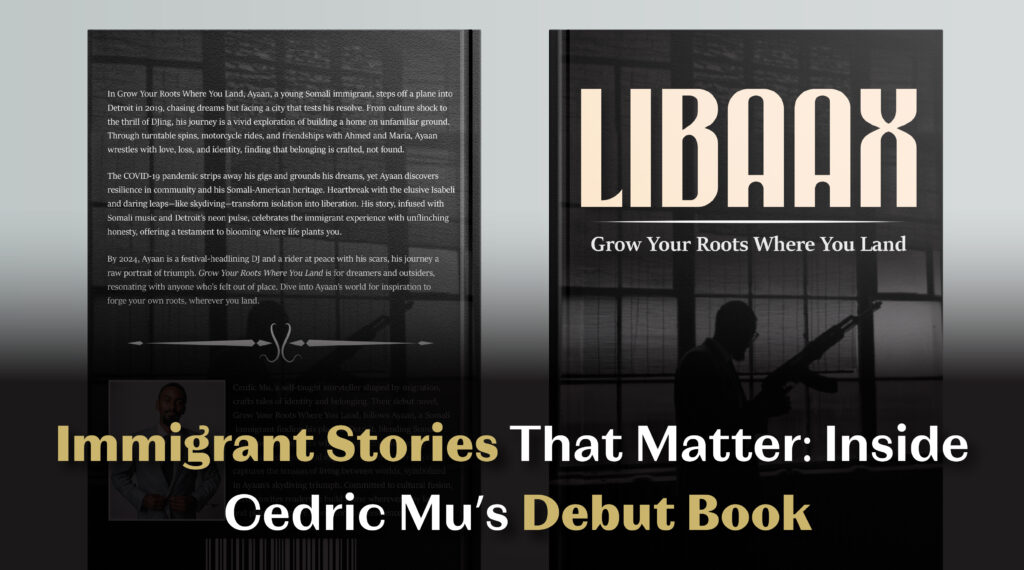
I remember the first time I heard a qaraami melody weave through the air, its lilting notes curling like smoke around the hum of a Detroit street corner. It was a sound that didn’t belong, yet it felt like home—a paradox I’ve carried since my own journey across borders. My name is Cedric Muhikira, and my debut book, Libaax: Grow Your Roots Where You Land, is my attempt to bottle that paradox, to give voice to the immigrant stories that pulse beneath the surface of every city, every life, every heartbeat. Cedric Mu’s Journey Shapes Libaax Writing Libaax wasn’t just about telling a story—it was about excavating the truths I’ve lived and witnessed. I grew up straddling cultures, my feet planted in two worlds that never quite aligned. One world spoke in the cadence of my childhood, rich with the smells of spiced tea and the laughter of aunties; the other demanded I learn its rhythms, its slang, its unspoken rules. In Detroit, where grit and soul collide, I found the perfect canvas to paint Ayaan’s story—a Somali immigrant who arrives with a civil engineering degree, a suitcase full of memories, and a heart heavy with displacement. Ayaan’s Story in Libaax: Raw and Real Ayaan’s journey in Libaax is not the tidy arc of tragedy or triumph we’re used to hearing about immigrants. It’s messier, more human. He’s scrubbing dishes one minute, spinning records the next, layering Somali qaraami melodies with trap beats as DJ Ayaan. His motorcycle, named Libaax, becomes his escape, his rebellion, his way of painting sagas on the asphalt. “He wasn’t the guy who fumbled slang or froze at Kroger’s endless aisles,” I wrote. “On Libaax, he was elemental—a streak of fire painting sagas on the asphalt.” That line, to me, is Ayaan’s heartbeat—his refusal to be reduced, his insistence on becoming. Inspiration Behind Cedric Mu’s Libaax Late-night conversations with first-generation youth, former refugees, and dreamers—people who, like me, know the ache of being ‘almost understood’—inspired this book. I wanted to capture the in-between moments—the dishwashing jobs, the fleeting romances, the friendships that stitch you back together. Ayaan’s connections with Ahmed, a reformed pirate with a quick laugh; Maria, a law student with a sharp mind; and Isabeli, a bartender whose fire matches his own, are the threads that hold his story together. These relationships, like the city of Detroit itself, are raw, vibrant, and unapologetic. Crafting Libaax: Cedric Mu’s Creative Process Writing Libaax was like building a mixtape. I’d blast qaraami and trap, letting the beats guide my pen. One of my favorite moments was crafting Ayaan’s first DJ gig—a scene where the club’s pulse syncs with his own, where every scent, flicker of light, and bass drop feels alive. The challenge was staying honest. Migration isn’t a monolith; it’s not all pain or all victory. It’s the stubborn beauty of carving space in a world that doesn’t always make room for you. I wanted Ayaan’s story to honor that complexity without romanticizing or pitying it. Why Cedric Mu Chose Immigrant Stories Why immigrants? I am one. I know the weight of carrying a story that doesn’t fit neatly into someone else’s narrative. Too often, we’re flattened into statistics or stereotypes, our truths buried under headlines.Ayaan’s story is a composite of so many real ones—young men who dream big, stumble hard, and keep dancing anyway. Through him, I explore displacement and identity, music as resistance, and the poetry of seeking home in unfamiliar places. I delve into masculinity and vulnerability, showing Ayaan’s emotional interiority, and celebrate the chosen family that anchors us when roots feel out of reach. Who Is Libaax For? Libaax is for anyone who loves stories that sing—adult and young adult readers drawn to immigrant narratives, urban fiction, or coming-of-age tales with lyrical prose. It’s for educators, social workers, and students diving into diaspora studies. It’s for anyone who’s ever felt like they’re remixing their own culture to fit a new world. What makes it unique? Its fusion of music, emotion, and urban grit. It’s not just about trauma or assimilation—it’s about how we rebuild joy, forge new rhythms, and claim agency in the chaos. Cedric Mu’s Vision for Libaax I hope Libaax does more than entertain. My wish is for readers to see immigrants as fully human—funny, fierce, flawed, and luminous. For immigrant readers especially, I want the story to reflect their experiences and help them feel less alone. For others, I hope it sparks empathy, curiosity, and a hunger to listen. This book is my bridge, my offering, my way of saying: these stories matter. Join Cedric Mu’s Libaax Journey You can find Libaax: Grow Your Roots Where You Land on Amazon or learn more at cedricmuhikira.com. I’m thrilled to host digital readings on Zoom, visit book clubs, and sign books at an independent bookstore in Detroit this fall. These events are about more than the book—they’re about fostering conversations on migration, identity, and storytelling through music. Stay tuned for dates and details by following me on social media. Cedric Mu’s Call to Listen This is just the beginning. Ayaan’s story, and the stories of so many others, are still being written—on vinyl, on asphalt, in the quiet moments of becoming. I hope you’ll join me in listening to their rhythm.

Libaax: Grow Your Roots Where You Land
Cedric Mu

The Power of Storytelling: Cedric Mu on Immigrants’ Lives

I was sixteen when I first realized stories could carry you across borders. Growing up between cultures, I’d sit cross-legged on the floor of my aunt’s cramped apartment, listening to her weave tales of Mogadishu’s bustling markets, the scent of cardamom lingering in her words. Those stories weren’t just memories—they were lifelines, stitching together the fragments of a life left behind. Years later, in the gritty pulse of Detroit, I found myself chasing that same thread, trying to capture the raw, unspoken truths of immigrant lives in my debut book, Libaax: Grow Your Roots Where You Land. This is the story of how I became a storyteller, and why I believe immigrant voices deserve to be heard, loud and unfiltered. Writing Ayaan’s Story in Libaax When I started writing Libaax, I wasn’t thinking about book deals or bestseller lists. I was thinking about Ayaan, my protagonist, a Somali immigrant who lands in Detroit with a civil engineering degree and a suitcase full of dreams, only to find himself washing dishes in a diner that smells of grease and regret. Ayaan’s story isn’t mine, but it’s born from the same soil—conversations with first-generation youth, former refugees, and dreamers who’ve known the ache of being almost understood. I saw their resilience in the way they laughed too loud at corner store jokes, or the way they’d remix old qaraami melodies with trap beats in basement studios. I wanted to write a story that didn’t just mourn displacement but celebrated the stubborn beauty of becoming. Capturing the Rhythm of Libaax Writing Ayaan’s journey felt like spinning a record. Each chapter had to hit the right beat—grief, joy, isolation, defiance—all layered like tracks in a mixtape. There’s this one moment in the book where Ayaan, now DJ Ayaan, steps into his first gig, the air thick with sweat and anticipation. I remember writing that scene, my headphones blaring, trying to catch the exact rhythm of his transformation. “He wasn’t the guy who fumbled slang or froze at Kroger’s endless aisles. On Libaax, he was elemental—a streak of fire painting sagas on the asphalt.” That line poured out of me because it’s what I saw in the people around me: immigrants who, despite every odds, found ways to carve out space, to become elemental in a world that often tried to shrink them. Cedric Mu’s Challenges in Crafting Libaax The process wasn’t always smooth. There were nights when the weight of these stories—mine, Ayaan’s, and the countless others I’d heard—felt too heavy. How do you write about migration without slipping into clichés of tragedy or triumph? How do you honor the dishwashing jobs, the fleeting romances, the friendships that become chosen family, without romanticizing or pitying? I wrestled with those questions, pacing my tiny Detroit apartment, the city’s hum seeping through my window. Detroit, with its cracked sidewalks and soulful pulse, became more than a backdrop—it became a character, a witness to Ayaan’s remixing of his Somali roots with the city’s gritty beats. Why Libaax Stands Out What makes Libaax special, I think, is its refusal to flatten the immigrant experience. Ayaan’s story isn’t about “making it” or falling apart—it’s about the in-between, the messy, poetic rhythm of survival. It’s about music as memory, motorcycles as freedom, and friendships with people like Ahmed, a reformed pirate with a wicked sense of humor, or Maria, a law student who sees Ayaan’s fire before he does. It’s about masculinity that dares to be vulnerable, about belonging when home is a moving target. I wrote it for the young adults who see themselves in Ayaan, for the educators and social workers who want to understand their students, for anyone who’s ever felt caught between worlds. Cedric Mu’s Vision for Libaax Readers I hope Libaax does more than tell a story. hope it invites readers to see immigrants as fully human—funny, flawed, fierce, luminous. I want readers to walk away with empathy, yes, but also curiosity, a hunger to ask questions and listen to the answers. For immigrants and their children, I hope they find mirrors in these pages, reflections of their own grit and grace. For others, I hope they hear the pulse of lives too often pushed to the margins. Join Cedric Mu’s Libaax Journey This journey’s just beginning. I’m thrilled to share Libaax through digital readings on Zoom, book club visits, and a book signing at a Detroit independent bookstore this fall. These events aren’t just about the book—they’re about building bridges, sparking conversations about migration, identity, and the power of storytelling. You can find Libaax on Amazon or learn more at cedricmuhikira.com, where I’ll post updates on events and ways to join the dialogue. Cedric Mu’s Love Letter to Immigrants Writing Libaax taught me that stories don’t just preserve—they amplify. They take the quiet moments—the dishwater hands, the late-night rides, the laughter over shared meals—and turn them into something resonant, something that demands to be heard. This book is my love letter to every immigrant who’s ever dared to grow their roots where they land. I hope you’ll read it, feel it, and carry its rhythm with you.

Scroll to Top